Solar Panels on Campervans: Worth Fitting or Not?
If you’re planning a campervan conversion, chances are you’ve considered fitting a solar panel. They’re one of the most popular upgrades available and are often seen as a must-have feature on modern campers.
But are they really worth it?
The answer depends on how you use your van, but for most campervan owners, a solar panel can provide genuine benefits by keeping leisure batteries charged and reducing reliance on campsites and external hook-ups.
Let’s take a closer look.
What Does a Solar Panel Do?
A solar panel converts sunlight into electricity, which is then used to charge your campervan’s leisure battery.
This stored energy can power everything from lighting and USB charging points to fridges, water pumps and diesel heaters.
The more energy you can generate while parked, the less dependent you become on mains electricity and campsite hook-ups.
For many owners, this freedom is one of the biggest attractions of campervan ownership.
The Three Main Types of Campervan Solar Panel
Not all solar panels are the same. There are three main types commonly fitted to campervans.
1. Rigid Solar Panels
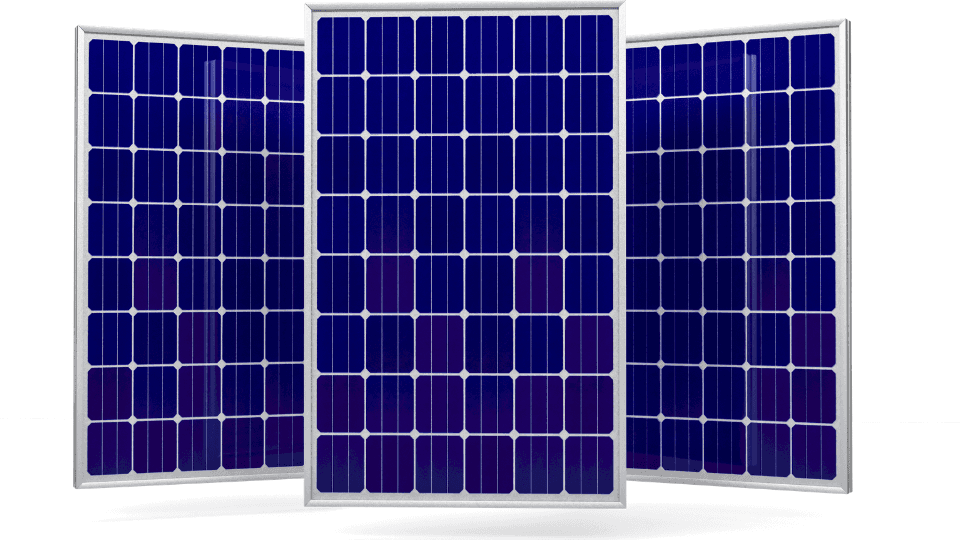
Rigid panels are the traditional option and are usually mounted above the roof using brackets.
They are generally the most efficient and durable type of solar panel available.
Because air can circulate underneath them, they tend to run cooler than other panel types, which helps maintain performance during hot weather.
Pros
• Highest efficiency
• Excellent durability
• Long lifespan
• Good heat dissipation
Cons
• Sits higher above the roof
• More visible
• Adds slightly more weight
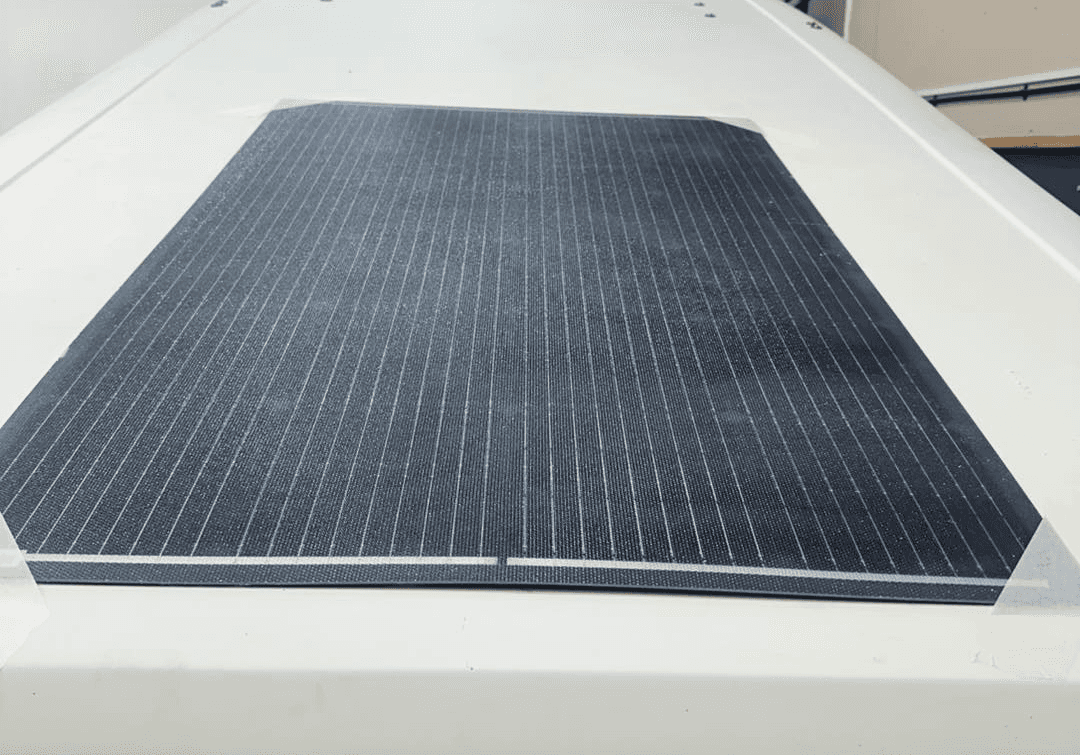
2. Semi-Flexible Solar Panels
Semi-flexible panels are thinner and lighter than rigid panels while still maintaining good efficiency levels.
They are often bonded directly to the roof and follow slight curves in the vehicle’s bodywork.
These panels offer a good balance between appearance, performance and weight.
Pros
• Lower profile
• Lighter than rigid panels
• Good efficiency
• Cleaner appearance
Cons
• Typically shorter lifespan than rigid panels
• Can run hotter due to being mounted directly to the roof
3. Fully Flexible Solar Panels
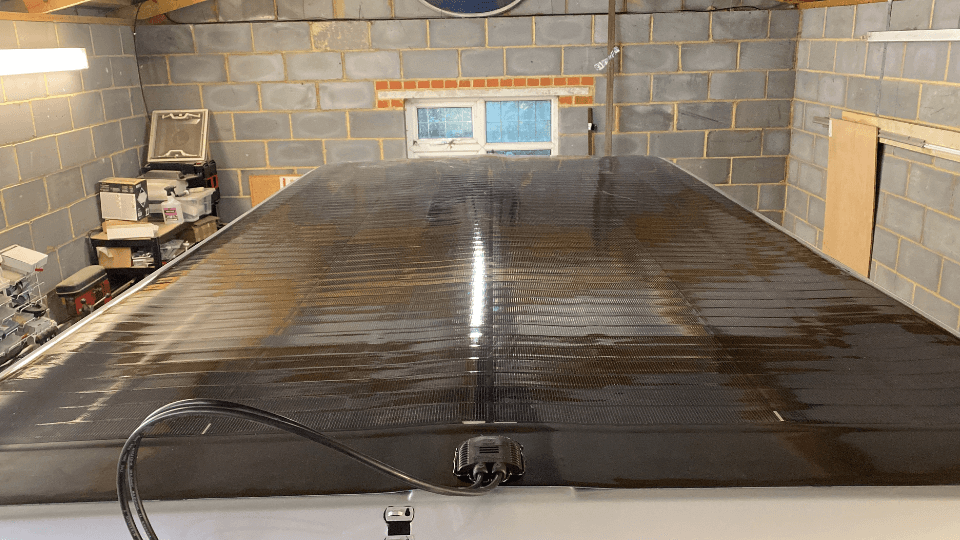
Modern fully flexible solar panels (pictured above on a Van Hux Campers conversion) have come a long way in recent years. Thanks to advances in solar cell technology, many premium flexible panels now use high-efficiency monocrystalline cells that can outperform some traditional rigid and semi-flexible panels.
These panels are extremely lightweight and can be bonded directly to the roof, creating a clean, low-profile installation with virtually no additional vehicle height.
For campervan owners looking to maximise power output while keeping weight and visual impact to a minimum, modern flexible panels are becoming an increasingly popular choice.
Pros
• Extremely lightweight
• Very low profile
• Modern high-efficiency cell technology
• Can outperform older rigid and semi-flexible panels
• Ideal for maintaining vehicle height restrictions
• Clean, factory-style appearance
Cons
• Premium panels can be more expensive
• Installation quality is critical for long-term performance
• Not all flexible panels are created equal, so product choice is important
How Efficient Are Campervan Solar Panels?
Modern solar technology has improved significantly in recent years.
Under ideal conditions, a quality 100W-200W solar panel can generate enough energy during daylight hours to offset much of the power consumed by typical campervan appliances.
However, it’s important to remember that solar performance varies depending on weather, season and where the van is parked.
A sunny day in southern Europe will obviously generate far more energy than a cloudy winter day in the UK.
That said, even in British conditions, solar panels can provide a useful contribution towards keeping your leisure battery charged.
The Benefits of Solar Panels
The biggest advantage of solar is simple: free electricity.
Once installed, the panel quietly generates power whenever there is daylight available.
This helps to:
• Keep leisure batteries topped up
• Extend off-grid camping capability
• Reduce reliance on electric hook-ups
• Support fridges, lighting and charging systems
• Help maintain battery health during storage
For many campervan owners, solar provides peace of mind. Knowing that your battery is continually receiving charge means you can spend longer away from campsites without worrying about running out of power.
What About Driving Around With One on the Roof?
This is a common concern, particularly for people new to campervans.
In reality, once professionally installed, most owners barely notice their solar panel.
Rigid panels add a small amount of height and weight, but the impact on driving is minimal. Semi-flexible and fully flexible panels are even less noticeable due to their low-profile design.
Unlike roof boxes, awnings or roof racks, solar panels create very little additional wind resistance and generally have no noticeable effect on everyday driving.
Most owners quickly forget they’re even there.
So, Is Solar Worth It?
For the majority of campervan owners, yes.
Solar panels won’t completely replace mains electricity in every situation, but they can significantly reduce your reliance on hook-ups and help keep your leisure battery charged throughout the year.
Whether you’re enjoying a weekend away, touring Europe or simply keeping your camper stored between trips, solar offers a practical and low-maintenance way of generating power.
If you regularly use your campervan away from campsites, a solar panel is one of the most useful upgrades you can make.
Our real world experience:
When we build campervans from scratch for customers we always fit a solar panel. We highly recommend adding them into your build as its very easy for us to fit them in the build stage when we are able to run the cables discreetly and safely within the van. On both of our campervans we have had solar power. My old van had a 150w semi flexi panel charging a 115ah AGM battery, we could comfortably go off grid for a week running our fridges and lights and chargers with no issues. Our current van has a 220w fully flexi panel charging a 230ah ROAMER Lithium battery, I'm predicting that we will never need to use hook up to charge our battery. The biggest panel we have fitted is a 500w fully flexi to a VW Crafter pop top, the customer sent me a pic of the charge status (whilst travelling down the M4) of 450w! These modern panels are incredibly efficient and we highly recommend using them on your van.
Final Thoughts
Solar panels have become a popular feature on modern campervans for good reason. They provide free energy, increase off-grid capability and help keep your electrical system healthy with very little maintenance required.
Whether you choose a rigid, semi-flexible or fully flexible panel, the right solar setup can make your campervan more self-sufficient and ready for adventure whenever you are.